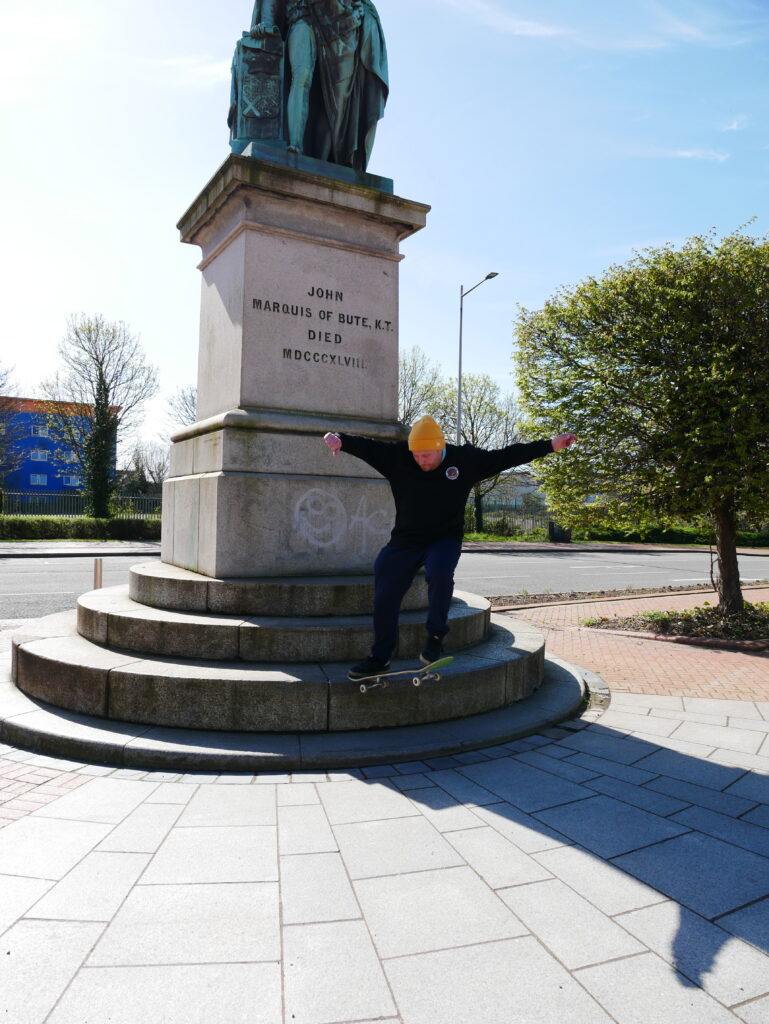
Visible and mobile, my body is a thing among things; it is one of them. It is caught in the fabric of the world, and its cohesion is that of a thing. But because it sees and moves itself, it holds things in a circle around itself – Maurice Merleau-Ponty, L’Œil et l’Esprit
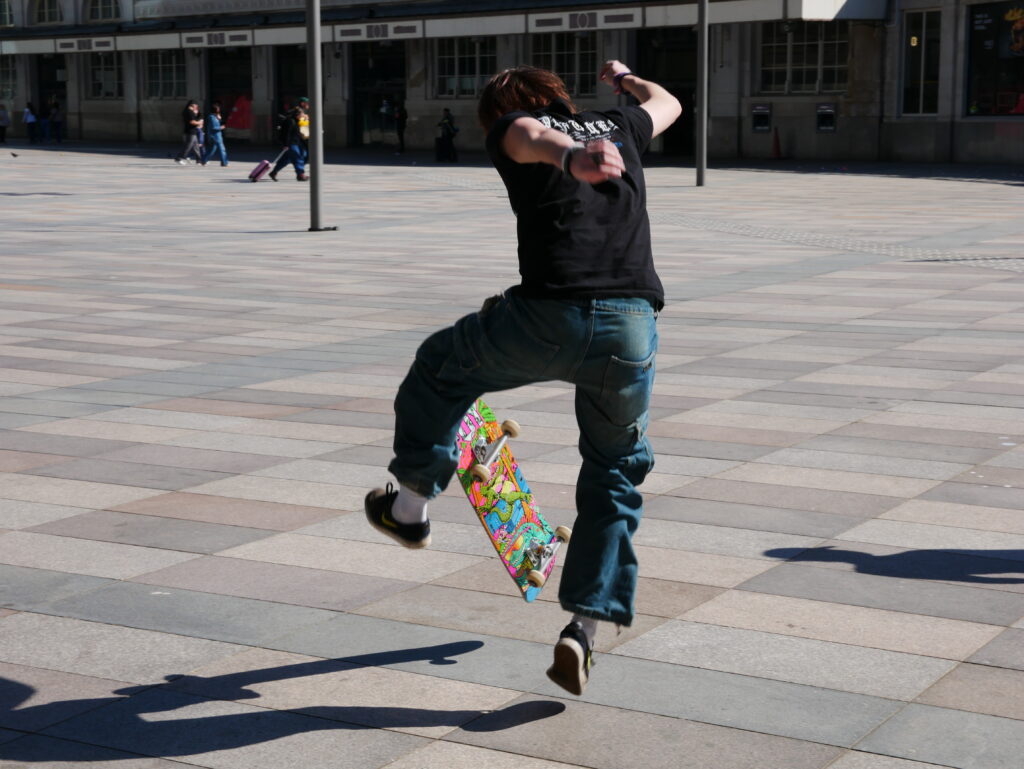
Space is not a scientific object removed from ideology or politics. It has always been political and strategic. There is an ideology of space. Because space, which seems homogeneous, which appears as a whole in its objectivity, in its pure form, such as we determine it, is a social product – Henri Lefebvre, The Production of Space
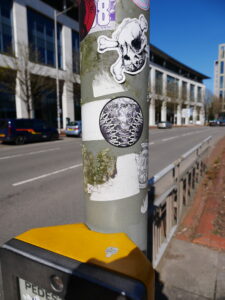
Stickers adorning a rubbish bin and pedestrian crossing by Callaghan Square (formerly Bute Square), Cardiff. They mark a contested space in the city.
The popularity of skateboarding in the UK has steadily increased over the years, seeing a sharp uptake in 2021 when we were all suffering the restrictions of lockdown, with a 94% increase compared with the previous year – From the slickwillies.co.uk blog
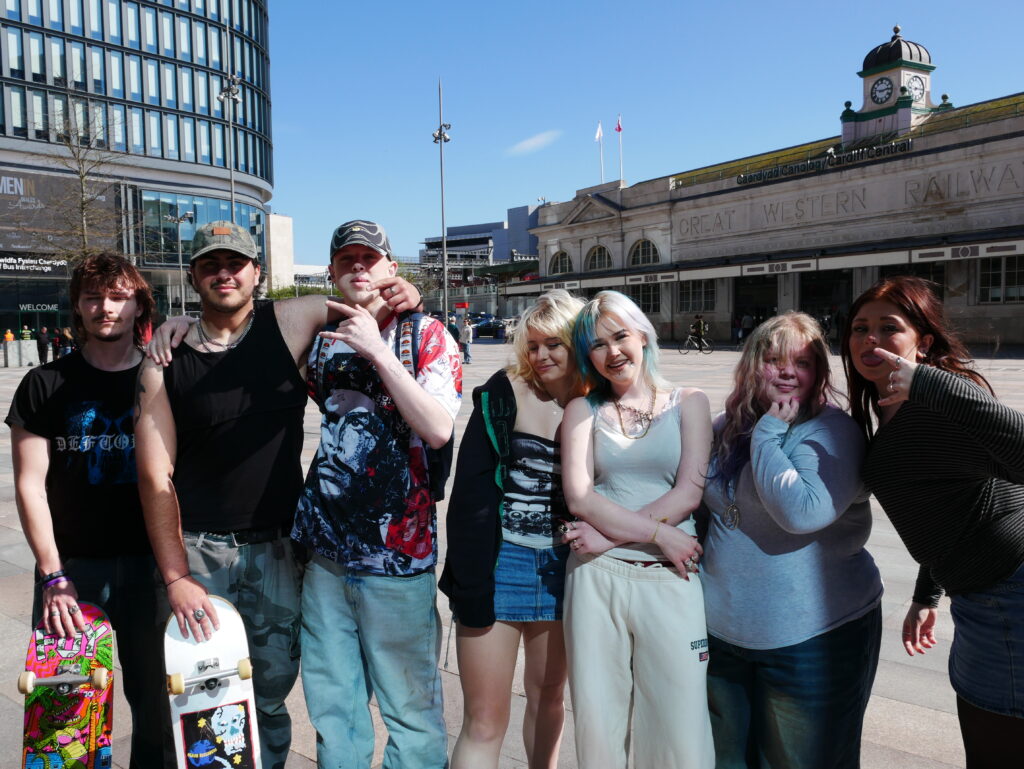
Being the first to commercialise a ‘new’ cultural activity, co-opting whatever is the latest iteration of ‘cool’ greatly increases the ability to command higher financial rewards. Put simply, if subversions can be co-opted then there is a good profit to be made – Oli Mould, Urban Subversion and the Creative City
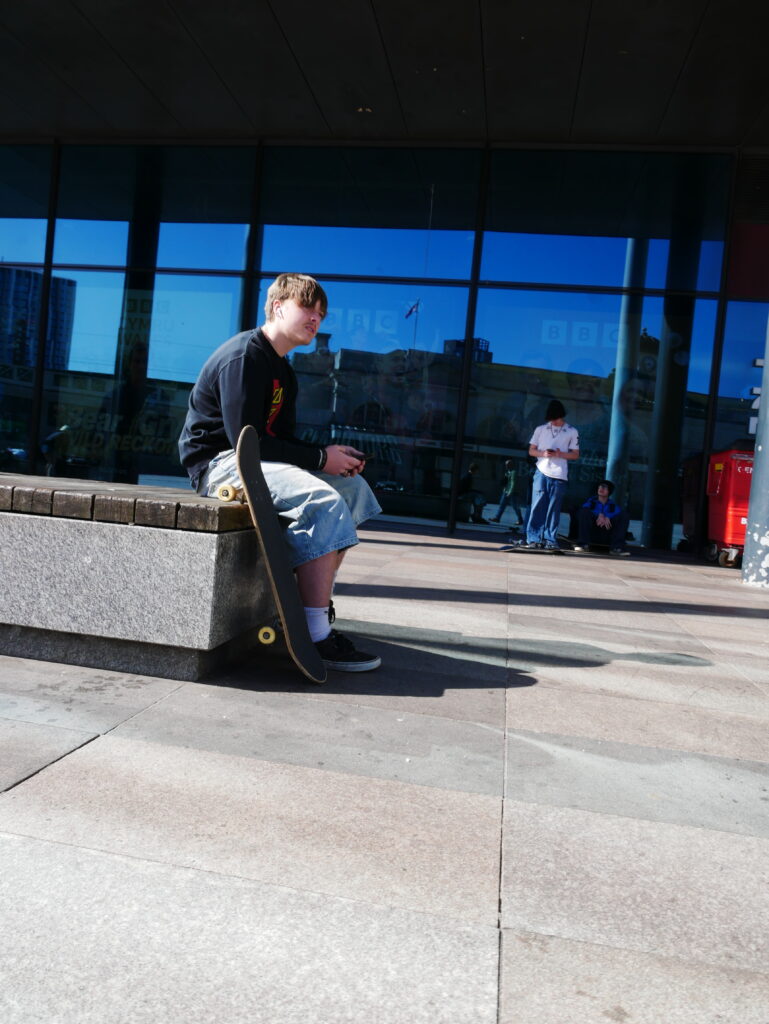
… current urban growth strategies, pregnant as they are with neoliberal philosophies, create urban spaces that are designed first and foremost to produce profit and wealth – Oli Mould, Urban Subversion and the Creative City
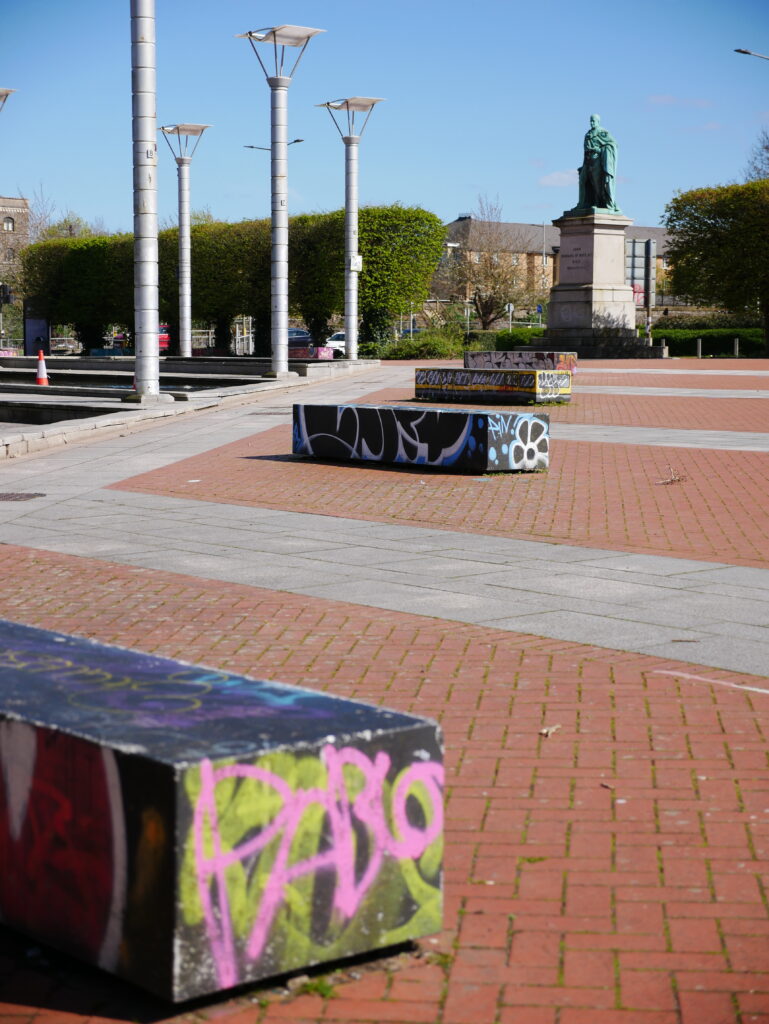
Pacification by cappuccino – A term coined by Sharon Zukin in The Cultures of Cities
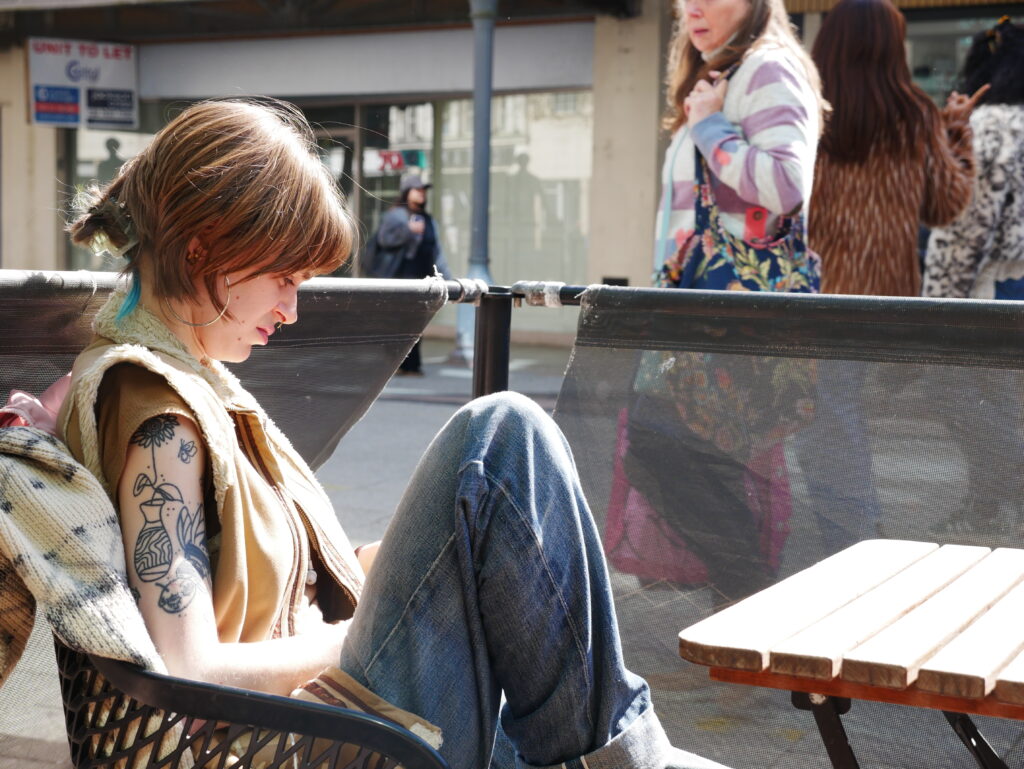
Defensive urban design, also known as hostile, unpleasant, or exclusionary architecture is an intentional design strategy that uses elements of the built environment to guide or restrict behaviour in urban space as a form of crime prevention, protection of property, or order maintenance – Cara Chellew, Defending Suburbia: Exploring the Use of Defensive Urban Design Outside of the City Centre
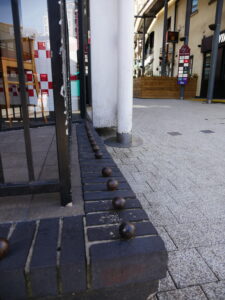
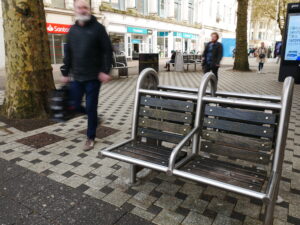
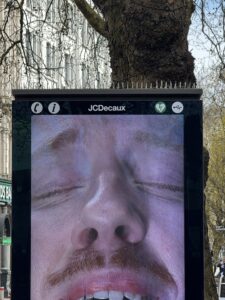
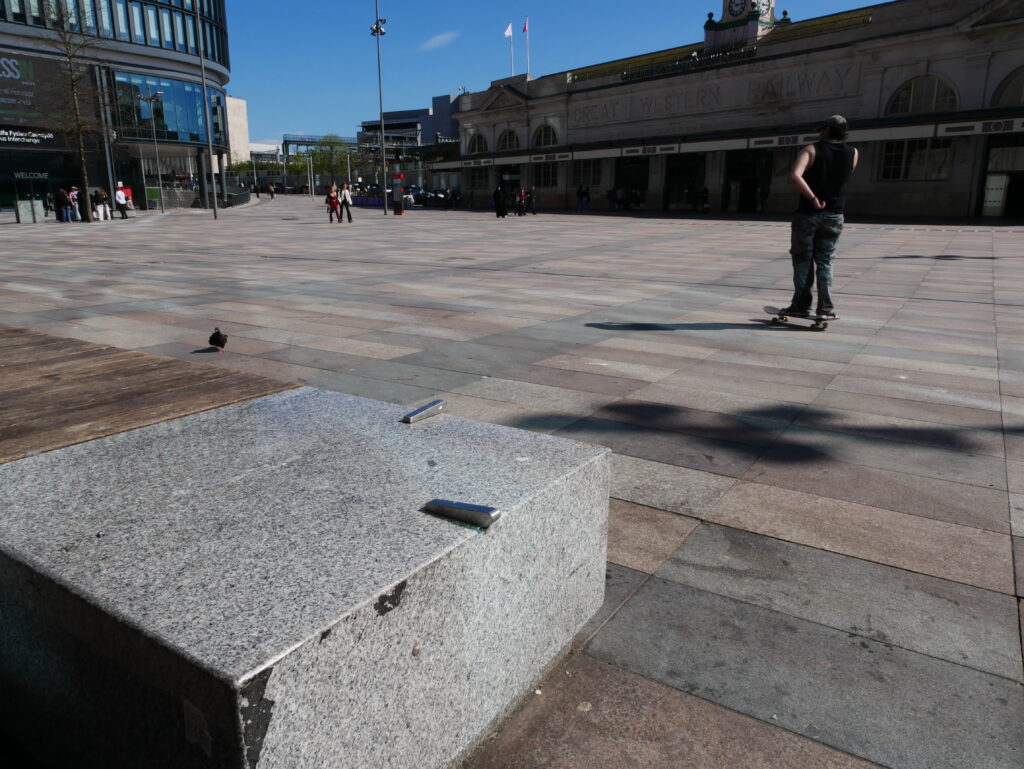
Loiterers, the homeless, urban sports practitioners and pigeons are the most frequent targets of hostile architecture, a form of defensive design specifically aimed at discouraging the use of (supposedly inclusive!) public spaces.
Deterring the most determined skaters from using your external public areas as a free-for-all, [brand name redacted out]’s Skate Deterrents help to protect your landscape’s presentation and longevity. Our skateboard stoppers work hard to save you time and money on potential damage costs caused by skateboarders, in-line skates and bikes. They also reduce your liability for personal injury to passersby – From the website of a manufacturer of anti-skate devices.
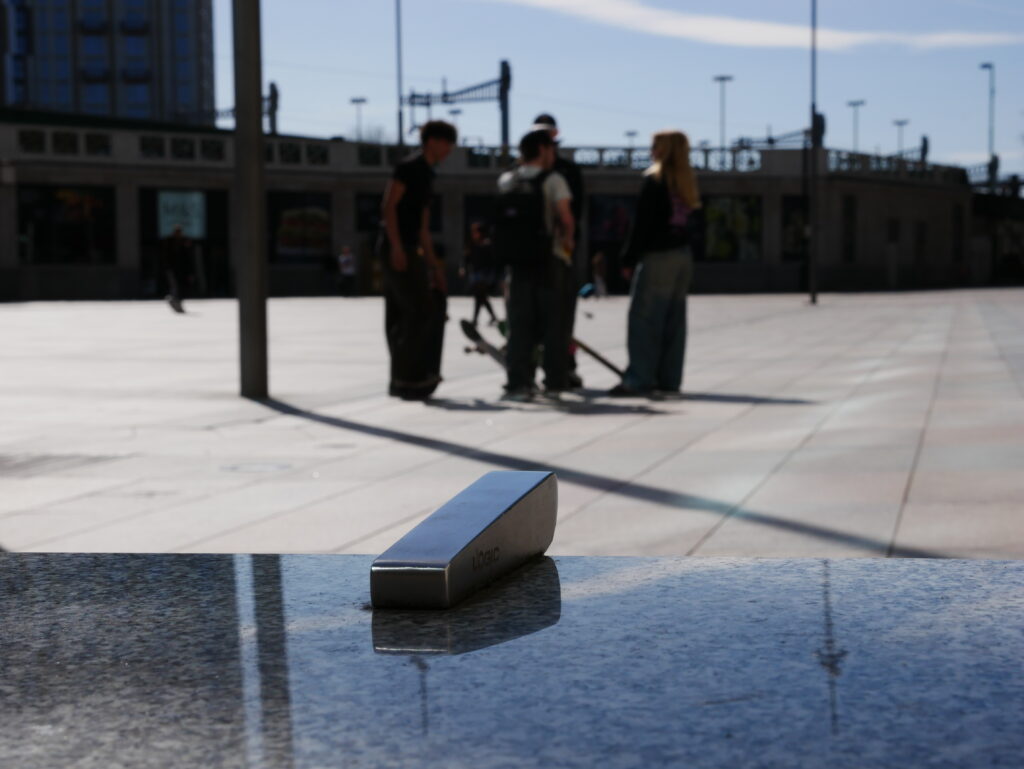
The constant rebuking of alternative functions of objects throughout the city begins to create a dualistic logic of functionality, with official and formulaic processes on the one hand, and those that do not conform to this on the other, causing an inevitable schism. So, instead of opening up new possibilities of urban function, many activities are set against the Creative City as deviant or ‘other’ – Oli Mould, Urban Subversion and the Creative City
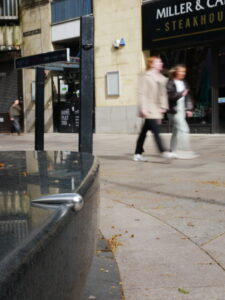
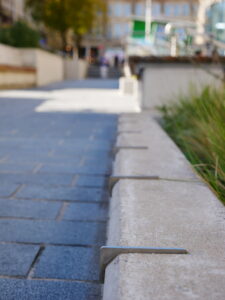
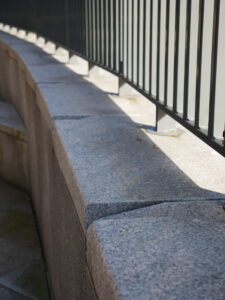
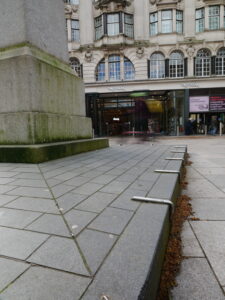
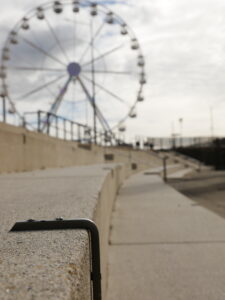
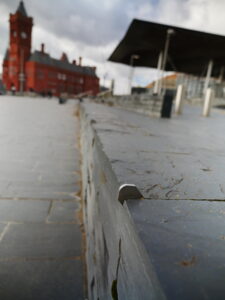
Various anti-skate devices throughout the city. What capitalism offers with the one hand (skateboarding as a lifestyle or image), it takes away with the other (skateboarding as a practice of space). A paradoxical case of financial interests clashing with that very aesthetics which capitalism has been relentless in courting.
The first stage of the economy’s domination of social life brought about an evident degradation of being into having […] The present stage, in which social life has become completely dominated by the accumulated productions of the economy, is bringing about a general shift from having to appearing … individual reality has become social, in the sense that it is shaped by social forces and is directly dependent on them. Individual reality is allowed to appear only if it is not actually real – Guy Debord, The Society of the Spectacle
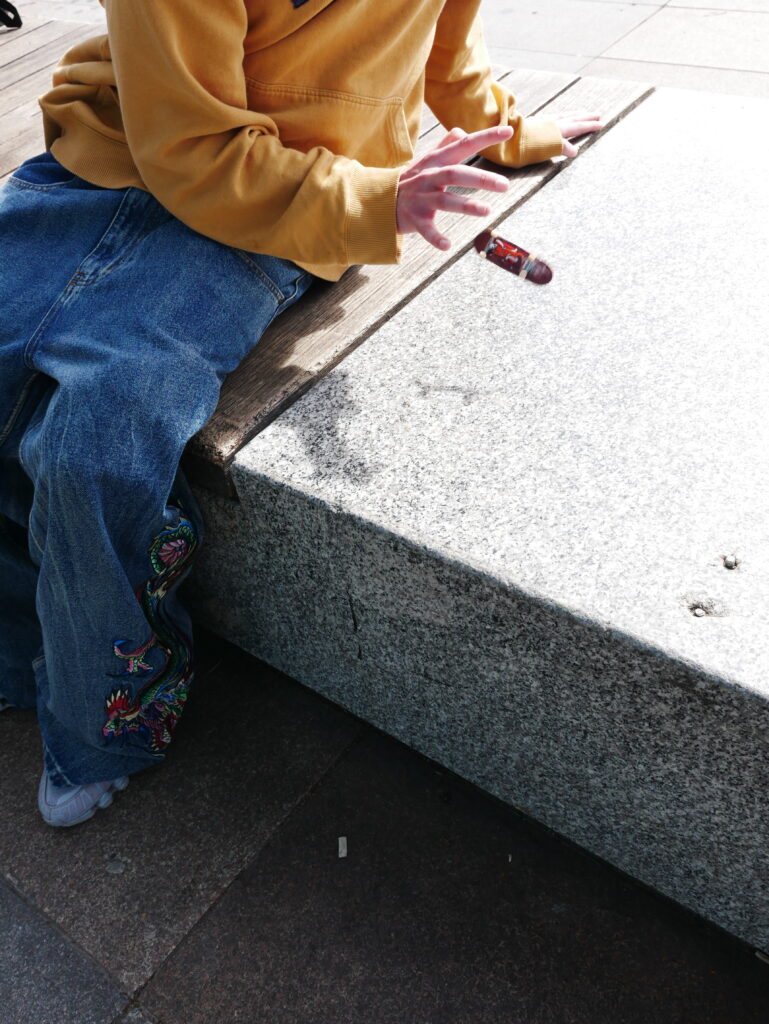
Space is political and ideological. It is a product literally filled with ideologies – Henri Lefebvre, The Production of Space
The ordinary practitioners of the city live ‘down below,’ below the thresholds at which visibility begins. They walk– an elementary form of this experience of the city; they are walkers […] whose bodies follow the thicks and thins of an urban “text” they write without being able to read – Michel de Certeau, The Practice of Everyday Life