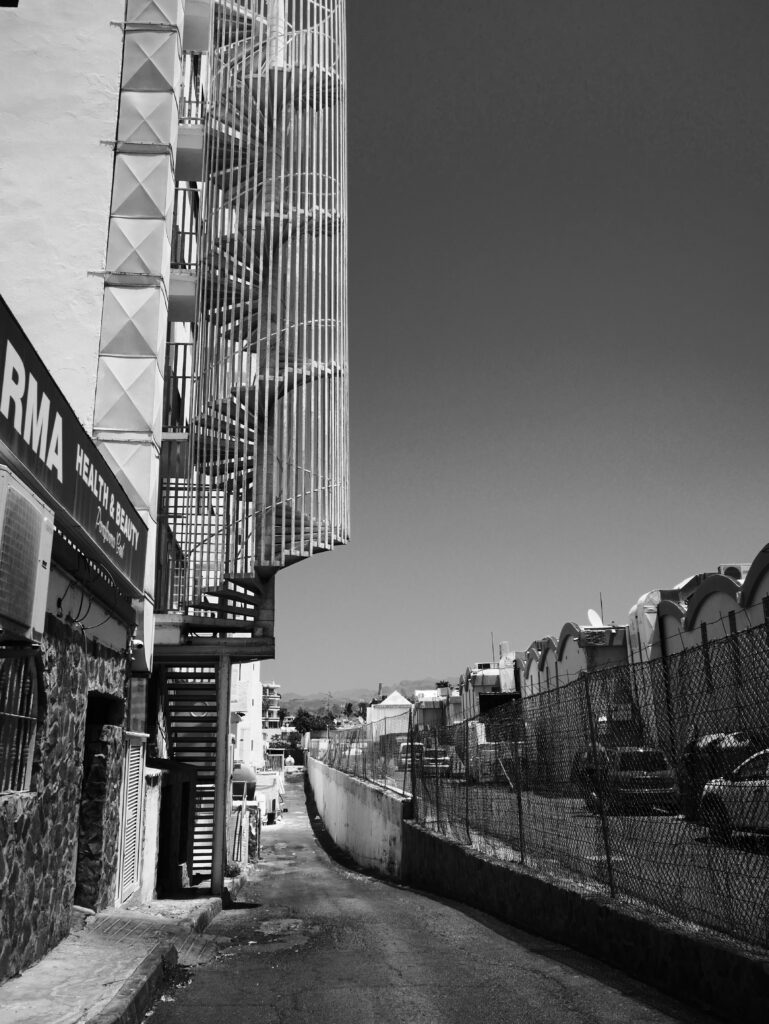
Born out of the French Letterists’ countercultural spirit, and further developed as a discipline by their better-known Situationist successors, psychogeography originally set out to interrogate -and ultimately disrupt- the impact of designed environments on human emotions. Through playful movement across the city and its suburban landscapes, it aimed to counter the increasing commodification of everyday life. A group of avant-garde artists and cultural critics, early practitioners sought to force open the cracks in the planned order, and usher them into visibility, by unsettling a map that never quite appeared to contain the territory it covered. From forgotten alleyways, to recalcitrant signs, from small cornershops born of another century, to reappropriated concrete playspaces, psychogeographers attempted to rewrite the story of those places that refused to be tamed, and to reclaim them.
It is sometimes said however, that there are as many psychogeographies as there are psychogeographers.
Guy Debord, in his Introduction to a Critique of Urban Geography (1955) tentatively offered the following definition for the discipline: “the study of the precise laws and specific effects of the geographical environment, consciously organized or not, on the emotions and behavior of individuals. The adjective psychogeographical, retaining a rather pleasing vagueness, can thus be applied to the findings arrived at by this type of investigation, to their influence on human feelings, and even more generally to any situation or conduct that seems to reflect the same spirit of discovery”.
The first edition of the Situationist International journal (1958) summarized Debord’s foundational text in a concise, but slightly reductive manner: “The study of the precise effects of geographical setting, consciously managed or not, acting directly on the mood and behaviour of the individual”.
What those early drafts did not emphasise however, but which would soon become a source of debate and rift within the Situationist International, was Debord’s (and the French branch of the movement’s) conception of the discipline as a radical revolutionary practice, not a mere set of ‘games’ (the dérive, détournement, the construction of situations, etc) detachable from their radical horizon, to be used for art production.
A resurgence of psychogeography in the late 1990s and early 2000s, propelled by writers such as Will Self and Iain Sinclair, and filmmakers such as Patrick Keiller, saw the discipline mostly distance itself from this radicalism, in order to further expand as a practice for uncovering hidden histories, occult forces, and suppressed meanings within the landscape. In his collection of essays titled Psychogeography, Self struggles to offer a definition for what he does. He talks of his attempts at answering the question of “the manner in which the contemporary world warps the relationship between psyche and place…” (Psychogeography, 2007). But beyond these initial words, Self solely defines his practice in the negative. His are not the revolutionary aspirations of Debord; they are not “writerly journeys” or “randomised transit, intended to outfox prescribed folkways”; nor even (referring to Iain Sinclair) “shamanic attempts to storm […] concrete bastions”. Ultimately then, Self’s explorations appear as those of one in a “fraternity [of] middle-aged men in Gore-Tex, armed with notebooks and cameras”. What is clear is that, in the forty-or-so intervening years, and in its displacement from Paris to London, a shift has occurred from the discipline’s affect as weapon, to an affect as archive. Keiller does acknowledge such a shift when he states in a 2017 interview with the British Film Institute: “I’ve tried to avoid identifying what I do with the term [psychogeography]… out of respect for the people who devised both the term and the practice in the 1950s. They were much more ambitious”.
Psychogeography: a practice of the landscape, as both subjective and objective space, aiming to subvert, misuse, or reveal the affordances through which the social and economic order is reproduced.
Thus, it is my contention here that a new definition is needed for a third-wave psychogeography. One which treads the line between a phenomenology of landscape, the theoretical background from which such an approach originally emerged, and a return to a critique of the commodification of everyday experience and of the established urban order. In those gaps where design, symbolism, and commerce falter, a renewed definition of psychogeography will aim to reconnect with the subtle acts of resistance (deliberate or contingent) that allow the unassimilable to pierce through. A practice of the landscape, as both subjective and objective space, aiming to subvert, misuse, or reveal the affordances through which the social and economic order is reproduced.
Where a first-wave psychogeography offered a revolutionary transformation of everyday life, and second-wave practitioners concerned themselves with an excavation of hidden meanings, a third-wave psychogeography should engage directly with the actionable structure of urban or rural environments, intervening at the level of affordances.
Why affordances?
According to the theory set out by psychologist James J. Gibson, affordances are the opportunities for action provided by certain objects or features of the landscape. Gibson posits that perception is direct, embodied, and action-oriented. It emerges from the relation between an organism and its environment; and it is structured by the actions the environment affords that organism. A bench affords sitting (relative to one’s body capacities); a cliff affords falling off.
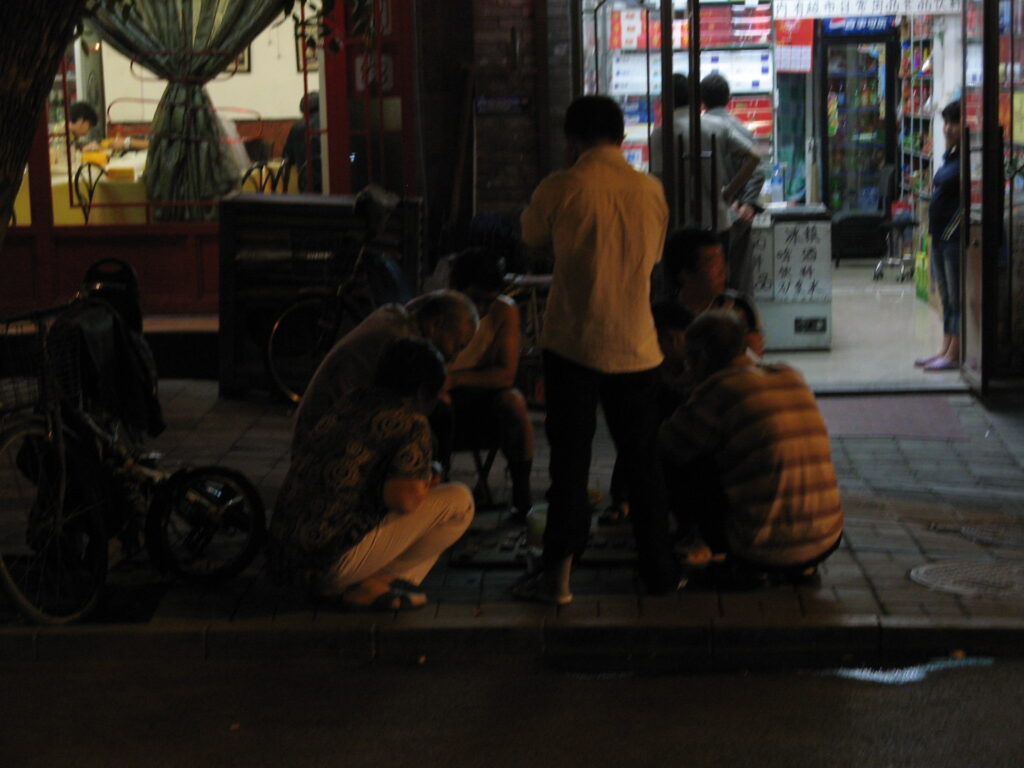
Thus, affordances are key sites of struggle between, for instance, urban planners, commodifying forces, and everyday users of the city. Far from being neutral, affordances are engineered and often overdetermined. In the city, for instance, hostile architecture utilises spikes, bolts, slopes or armrests to deter sleeping on doorsteps and benches. While market forces and technocrats attempt to shape what the urban environment affords, everyday users resist or repurpose these affordances in their everyday practices: the former use what sociologist Michel de Certeau calls ‘strategies’ to codify and enforce acceptable affordances, whereas the latter use the tactics of everyday life to reshape them to their needs and wishes.
An affordance-based psychogeography aims for more than the revealing of a hidden meaning, or the détournement of symbolic orders: it enacts a shift from contemplation back to practice, and treats affordances not metaphorically, but rather materially. It seeks to act upon the very conditions through which the social order is produced and enforced, in order to reclaim the streets and the landscape at large from the forces that seek to contain and control them.
A few links:
Guy Debord, Introduction to a Critique of Urban Geography: https://www.bopsecrets.org/SI/urbgeog.htm
First edition of the Situationist International journal: https://libcom.org/article/internationale-situationniste-1
Keiller’s BFI interview: https://www.bfi.org.uk/interviews/patrick-keiller-london-robinson-trilogy